




Forrige innlegg
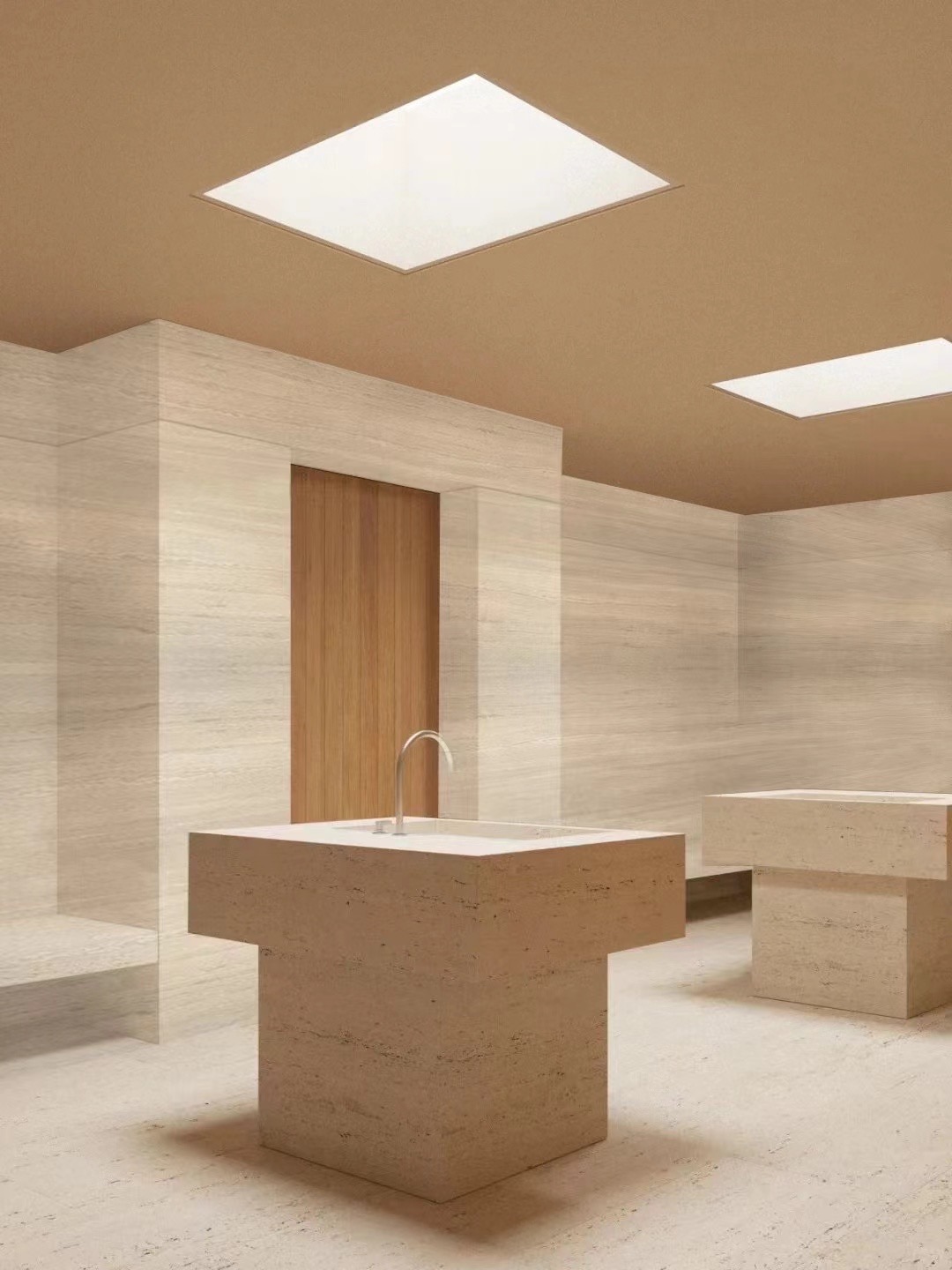
In contemporary high-end furniture manufacturing and commercial interior design, the concept of “lightweight stone aesthetics” has become a clear global trend. Natural travertine is widely used in hotels, showrooms, office environments, and custom residential interiors due to its distinctive porous texture and warm neutral tones. However, its inherent limitations—such as high weight, processing cost, and construction complexity—have accelerated the evolution of engineered decorative surfaces toward higher realism and stronger technical performance.
The Synchronized Travertine Design Melamine Board represents a new-generation decorative material that leverages synchronized embossing (EIR) technology to unify visual texture and tactile structure, delivering a more immersive and realistic stone-like experience.
To know more about YAKCO Synchronized Travertine melamine board
1. From “Visual Simulation” to “Tactile Consistency”: The Core Upgrade of Synchronized Embossing
Traditional stone-pattern decorative boards suffer from a fundamental limitation:
they look like stone but do not feel like stone.
The printed pattern and embossed texture are often misaligned, creating a disconnect between vision and touch.
Synchronized Travertine boards solve this through EIR (Embossed in Register) technology, which precisely aligns surface embossing with printed texture. The core process includes:
- High-resolution scanning of natural travertine textures
- Precision alignment between gravure printing and embossing steel plates
- Micron-level synchronization during hot pressing
- Multi-dimensional coordination of gloss, depth, and relief
Ultimately achieving:
Visual texture = tactile structure
This transforms the panel from a decorative imitation into a material-level reproduction of natural stone.
To know more about YAKCO technology
2. Engineering Travertine Aesthetics: The Design Logic
The aesthetic value of natural travertine is defined by three core characteristics:
1. Low-saturation mineral tones
Beige, warm white, and soft gray form a stable spatial base suitable for modern minimalism and luxury interiors.
2. Irregular porous structure
Naturally formed pores and flowing textures convey a sense of geological time.
3. Layered sedimentary pattern
Creates depth and visual stratification unique to limestone formations.
In synchronized travertine design systems, these features are reinterpreted into engineered logic:
- Controlled micro-pore textures to avoid visual chaos
- Directional layering for spatial guidance
- Optimized light interaction for enhanced matte stone perception
The result is a balance between natural authenticity and industrial consistency.
3. Material Structure and Performance System
Modern high-end melamine systems—such as those developed by YAKCO—typically adopt a multi-layer engineered structure:
Surface System
- Melamine-impregnated decorative paper (wear-resistant layer)
- UV-resistant anti-yellowing coating
- Matte mineral coating for stone-like touch
Texture System
- EIR synchronized embossing steel plate
- Deep micro-embossing process for enhanced tactile realism
Substrate System
- MDF / high-density particle board / OSB
- Low-formaldehyde eco-friendly adhesive systems (E0/E1 compliant trends)
Performance Targets
- High scratch and wear resistance
- Moisture and heat stability
- Anti-stain and easy-clean properties
- Long-term color consistency
This architecture transforms stone aesthetics into controllable industrial performance.
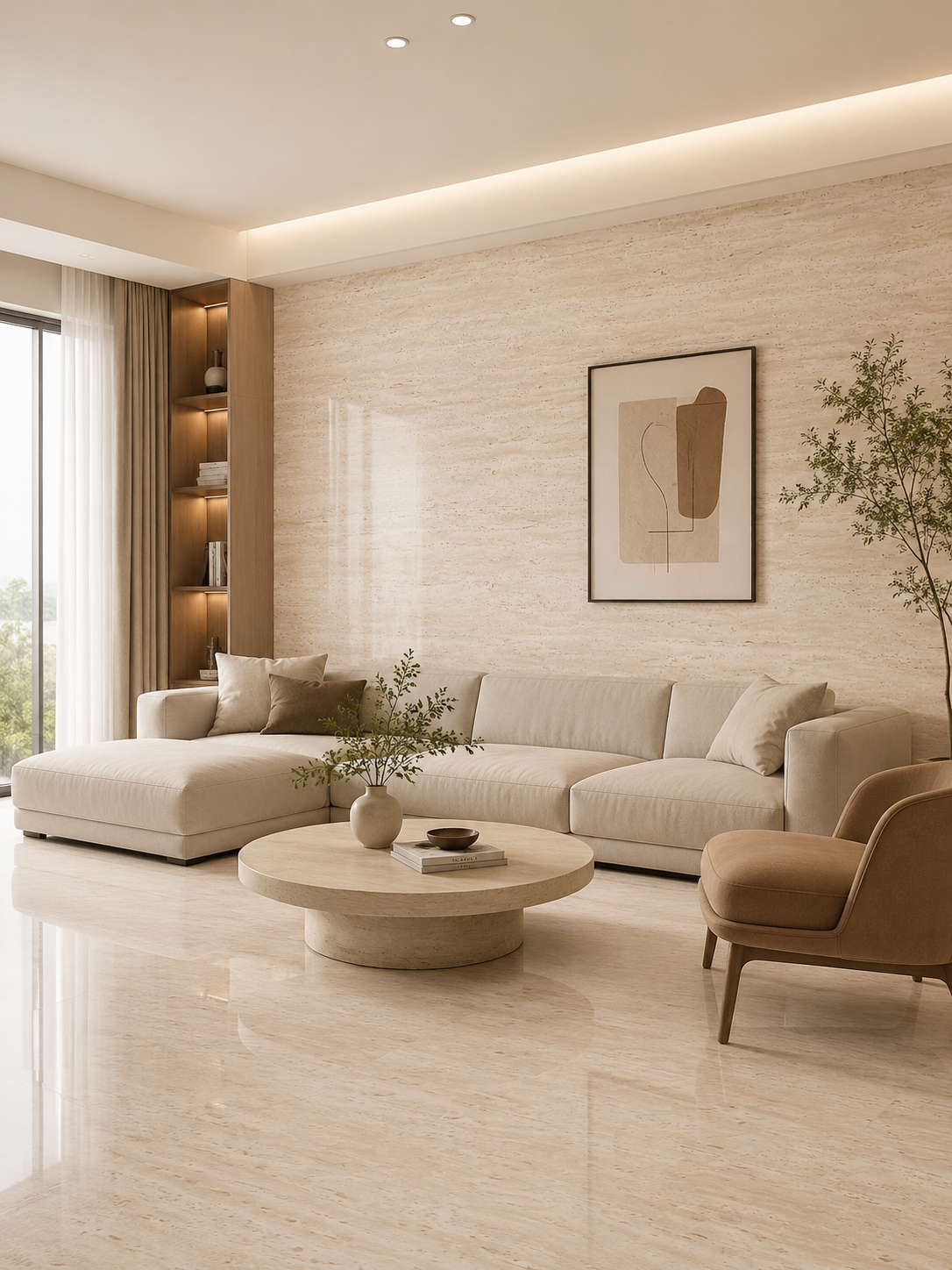
4. Applications: From Architectural Surfaces to Furniture Systems
The application scope of synchronized travertine design is expanding rapidly:
1. Commercial Interiors
- Hotel lobbies and feature walls
- Retail display environments
- Office reception areas
It ensures visual continuity and reduces installation complexity compared to natural stone.
2. Custom Furniture Systems
- Cabinet doors and wall systems
- Kitchen islands and tabletops
- Wardrobe facades
Its key advantage is lightweight construction versus real stone.
3. Integrated Interior Architecture
- Wall-to-ceiling continuous surfacing
- Modular dry-install systems
- Large-area seamless aesthetics
5. Design Trend: The Era of Low-Burden Stone Materials
Three macro trends are shaping the global interior material industry:
1. Material Lightweighting
Reducing structural load and improving installation efficiency.
2. Visual Realism Enhancement
Moving from “pattern imitation” to “structural replication”.
3. Industrial Consistency
Ensuring uniform texture across batches for large-scale projects.
Synchronized Travertine boards sit precisely at the intersection of these demands.
6. Comparison with Natural Stone
|
Dimension |
Natural Travertine |
Synchronized Melamine Board |
|
Weight |
Heavy |
Lightweight |
|
Cost |
High |
Controllable |
|
Installation |
Complex |
Modular |
|
Texture Consistency |
Variable |
Highly consistent |
|
Workability |
Limited |
Flexible cutting & processing |
Conclusion:
This is not a replacement of stone, but a redefinition of its application system.
7. Conclusion: From Material Replication to Spatial Language
The significance of Synchronized Travertine Design Melamine Board goes beyond imitation. It establishes a new material logic:
- Integrating natural aesthetics into industrial production systems
- Freeing spatial design from material constraints
- Transforming texture into a controllable design language
Within advanced decorative material systems represented by YAKCO, synchronized stone-pattern boards are becoming a critical bridge between natural aesthetics and industrial manufacturing.
Future competition in surface materials will no longer be about “how realistic it looks,” but rather:
whether it can precisely express the spatial language of natural stone.